
How to Choose the Right Laminate Flooring for Your Home
Updated: Aug 19
How to Choose the Right Laminate Flooring for Your Home
TL;DR
Choosing the right laminate flooring for a Central Oregon home comes down to matching AC rating, thickness, and core material to how each room actually gets used, then finishing with locally appropriate wood tones and hand-scraped or embossed textures.
Key Takeaways
AC3 rated laminate with a high-density fiberboard (HDF) core holds up best in most Central Oregon households with kids, pets, or regular foot traffic.
Planks between 10mm and 12mm thick feel more solid underfoot, absorb sound better, and hide small subfloor imperfections better than thinner options.
Laminate is water-resistant, not waterproof, so bathrooms, laundry rooms, and other moisture-heavy spaces are better suited to luxury vinyl plank.
Embossed in Register (EIR) and hand-scraped textures give the most realistic wood look and are easiest to keep looking new since they hide light scratching.
A local showroom lets homeowners see full-size samples in their own lighting before committing, which matters more than most people expect once the flooring is installed.
Why Laminate Remains a Smart Choice

Laminate flooring has earned its reputation as one of the most practical flooring options for Central Oregon homes, and modern versions bear little resemblance to the laminate of a decade ago. Improved core construction, more convincing wood look printing, and better wear layers have made today's laminate a durable, cost effective alternative to hardwood, particularly in living rooms, bedrooms, hallways, and home offices.
The challenge for most homeowners is not whether laminate is a good option. It is making sense of the specifications on the box, since AC ratings, thickness numbers, and core types rarely get explained in plain language at the store. Getting these choices right the first time means fewer surprises down the road and flooring that actually performs the way it is expected to.
Understanding AC Ratings

The Abrasion Criteria (AC) rating measures how much wear a laminate floor can handle before it starts to show. Ratings run from AC1 through AC5:
AC1: Light residential use, best suited to bedrooms and closets with minimal foot traffic.
AC2: General residential use, appropriate for living rooms and dining rooms with moderate activity.
AC3: Heavy residential and light commercial use, built for high-traffic homes, kitchens, and hallways.
AC4: Commercial grade, used in boutiques, offices, and retail spaces.
AC5: Heavy commercial use, designed for spaces with constant foot traffic.
For most Central Oregon households, AC3 offers the right balance of durability and value, especially in homes with children, pets, or an active lifestyle that tracks in dirt and grit from outdoor activities.
Thickness Specifications
Laminate planks typically range from 6mm to 12mm thick, and thickness affects more than just the price point.
Thinner planks in the 6mm to 8mm range are budget friendly and work fine in low-traffic bedrooms, but they can feel hollow underfoot and reveal small imperfections in the subfloor beneath them.
Thicker planks in the 10mm to 12mm range feel more solid when walked on, absorb sound better, and tolerate minor subfloor irregularities more gracefully. For main living areas, hallways, and any space that sees daily use, the extra thickness is worth the investment.
Core Material: HDF vs. Standard Fiberboard
The core of a laminate plank does most of the structural work. High-Density Fiberboard (HDF) cores offer noticeably better strength, dent resistance, and moisture tolerance compared to standard fiberboard cores found in lower-end products.
For homeowners comparing mid-range and upper-range laminate, prioritizing an HDF core is one of the simplest ways to improve long-term performance without overspending on features that will not get used.
Water-Resistance vs. Waterproof: A Critical Distinction
One of the most common points of confusion is the difference between water-resistant and waterproof flooring. Laminate flooring is water-resistant, which means it can handle a spill that gets wiped up promptly, but it is not built to withstand standing water or ongoing moisture exposure.
For bathrooms, laundry rooms, and other moisture-prone areas, luxury vinyl plank (LVP) is the better suited material. Saving laminate for the rooms where it performs best, and choosing LVP where waterproofing genuinely matters, avoids costly problems later.
Surface Textures and Styles
Laminate is available in a range of surface textures, each with a different look and feel:
Smooth finishes offer a clean, contemporary appearance that is easy to keep looking sharp.
Hand-scraped textures mimic the look of hand-finished hardwood and do a good job of hiding light scratches over time.
Embossed in Register (EIR) finishes align the surface texture with the printed wood grain pattern, producing the most realistic look currently available.
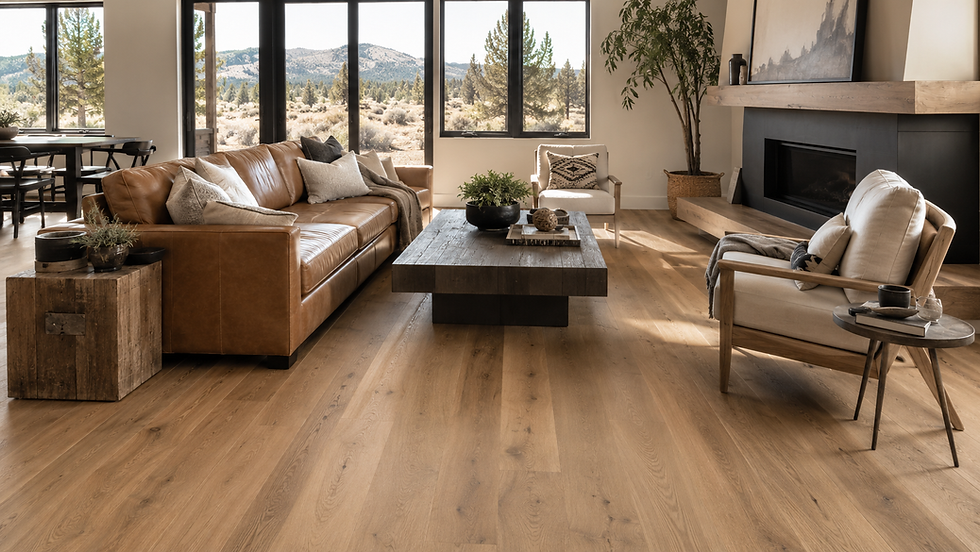
Warm wood tones like oak and walnut, along with contemporary gray finishes, tend to complement Central Oregon's high desert and mountain influenced home styles particularly well.
Room-by-Room Matching Guide
Matching specifications to the room makes the biggest difference in how satisfied a homeowner is with the finished floor:
Living rooms: AC3 or higher, 10mm to 12mm thickness, EIR texture for realism.
Kitchens: AC3 minimum, HDF core with water-resistant properties, smooth or hand-scraped finish.
Bedrooms: AC1 to AC2 is generally sufficient, 8mm to 10mm thickness, any texture works well.
Hallways: AC3 to AC4 with thicker planks to hold up under repeated foot traffic.
Basements: laminate only makes sense in fully conditioned, moisture-controlled basements.
When to Consider Luxury Vinyl Instead
Laminate is not the right fit for every space. When a room needs full waterproofing, such as a bathroom, laundry room, or mudroom, luxury vinyl plank is the more dependable choice. Both materials offer realistic wood look aesthetics and straightforward maintenance, so the decision usually comes down to how much moisture exposure a room actually sees.
Working with a local Redmond showroom makes this comparison easier, since homeowners can view laminate and LVP samples side by side under the same lighting their home actually has.
Final Thoughts
Choosing the right laminate flooring comes down to a handful of decisions: matching AC rating and thickness to how a room gets used, prioritizing an HDF core for durability, understanding that laminate is water-resistant rather than waterproof, and selecting a texture and tone that fit the home's overall style. When these fundamentals are addressed correctly, laminate delivers excellent value and years of reliable performance.
You can see examples of completed laminate flooring installations on our Google Business Profile, along with photos from other Central Oregon homes we have worked on.
FAQ
What laminate specifications work best for high-traffic areas?
AC3 or higher, at least 10mm thick, with an HDF core. Embossed or hand-scraped surface textures also help hide everyday scratches and keep the floor looking newer for longer.
What thickness of laminate is ideal for most homes?
Between 10mm and 12mm for most residential spaces. Thinner planks in the 6mm to 8mm range are best reserved for low-traffic secondary rooms like closets or guest bedrooms.
Where can I see laminate flooring options in person in Central Oregon?
Oregon Floor Trends offers a curated laminate selection and free in-home consultations for homeowners in Bend, Redmond, Sisters, and Sunriver.
Is laminate flooring waterproof?
No. Laminate is water-resistant, which means it handles occasional spills that are cleaned up quickly, but it is not designed for standing water. Luxury vinyl plank is the better option for bathrooms and other moisture-heavy spaces.
How should I choose a laminate color for my home?
Consider existing wall colors, cabinetry, and how much natural light the room gets. Warm tones tend to suit Central Oregon interiors well, lighter shades help open up smaller rooms, and darker finishes add richness to larger spaces. Always view samples in the room's actual lighting before deciding.
What is the difference between hand-scraped and EIR laminate textures?
Hand-scraped textures mimic the look of hand-finished hardwood and hide light scratches well. EIR, or Embossed in Register, aligns the surface texture with the printed grain pattern for the most realistic wood look currently available.


Comments