
Flooring for Redmond, OR Light Industrial Spaces
Flooring for Redmond, OR Light Industrial Spaces
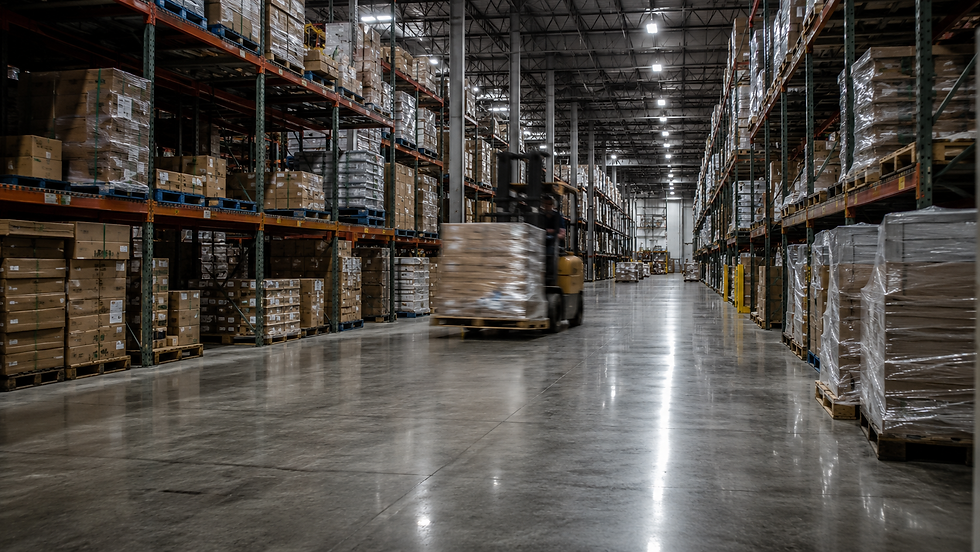
Redmond's position along Highway 97 and its proximity to Roberts Field have made it a genuine logistics and light industrial hub for Central Oregon, and the warehouses, distribution centers, and light manufacturing spaces that have grown up around that infrastructure need flooring built for real industrial punishment.
Flooring for Redmond light industrial spaces has to withstand forklift traffic, heavy point loads from stored inventory, chemical exposure, and constant abrasion in a way that residential or even standard office flooring was never designed to handle, and the consequences of an underspecified floor show up quickly in the form of cracking, delamination, and costly unplanned repairs.
Oregon Floor Trends works with warehouse operators, distribution businesses, and light manufacturers throughout Redmond to specify flooring systems built for these demands, and understanding the real differences between the primary industrial flooring categories, polished concrete, epoxy coatings, and sealed concrete, helps a business avoid a costly mismatch between what gets installed and what the space actually needs to survive.
Key takeaways:
Polished concrete has become the industry standard for high-volume logistics and distribution facilities, offering exceptional durability with minimal ongoing maintenance.
Epoxy coating systems remain the better choice for spaces with chemical exposure, food and beverage handling, or environments needing a fully seamless, non-porous surface.
Static-dissipative or conductive flooring is a specific requirement for facilities handling sensitive electronics or working near flammable materials, a genuine consideration for some of Redmond's aviation-adjacent businesses.
Forklift traffic and heavy point loads from racking and pallet storage demand a flooring system engineered for the actual equipment and inventory weight a facility handles, not a generic industrial spec.
Proper surface preparation and moisture testing before installation are non-negotiable steps that determine whether an industrial floor lasts decades or fails within a few years.
Why Industrial Flooring Decisions Are Fundamentally Different

Industrial flooring doesn't need to solve for the acoustic or brand-experience concerns that shape office or retail flooring decisions. Instead, it needs to solve for genuinely different physical stressors: sustained heavy point loading from racking systems and stored inventory, constant abrasion from forklift tires and material handling equipment, and in many cases, direct exposure to chemicals, oils, or other substances that would degrade standard flooring within a short time.
This means industrial flooring specification in Redmond starts from an engineering question rather than a design question: what specific loads, traffic patterns, and chemical exposures will this floor actually face, and which system is built to handle exactly that combination over the facility's expected operating life. Getting this wrong isn't a minor aesthetic disappointment the way a mismatched retail floor color might be, it's a functional failure that can mean costly repairs, equipment damage, and operational downtime.
Polished Concrete: The Logistics Industry Standard

Polished concrete has emerged as the gold standard for high-volume logistics and distribution facilities, and Redmond's growing warehouse and distribution sector reflects this broader industry trend. The process grinds the existing slab with industrial-grade diamond tooling and applies chemical densifiers, transforming a porous, dust-generating slab into a rock-hard, non-dusting surface that eliminates one of the most persistent maintenance headaches in a working warehouse: airborne concrete dust that settles on inventory, equipment, and eventually gets tracked throughout a facility.
Beyond durability, polished concrete offers a genuine operational advantage through light reflectivity. A properly polished floor reflects significantly more ambient and overhead lighting than a standard or sealed concrete surface, which can measurably reduce a facility's lighting energy costs while also improving visibility for forklift operators and warehouse staff navigating racking aisles. This combination of durability, reduced maintenance, and lower ongoing energy costs is why polished concrete has become the default recommendation for most new-build and major-renovation logistics projects across the industry, not just a passing design trend.
Epoxy Coatings for Chemical Exposure and Seamless Surfaces

Epoxy coating systems remain the better specification for facilities dealing with chemical exposure, food and beverage handling, or any application requiring a fully seamless, non-porous surface that resists staining and moisture infiltration completely. Epoxy's chemical resistance genuinely outperforms polished concrete in environments where oils, solvents, or corrosive substances are a regular part of daily operations, protecting the underlying slab from the kind of degradation those substances would eventually cause to an unprotected or lightly sealed surface.
Different epoxy system thicknesses and formulations suit different traffic and impact conditions. Thinner, self-leveling epoxy systems work well for lighter traffic warehouse and storage applications, while thicker, trowel-applied systems, sometimes called urethane cement or high-build epoxy, hold up to heavier forklift traffic and provide meaningfully better impact and gouge resistance for facilities with more aggressive daily equipment use.
System | Best For | Chemical Resistance | Maintenance |
Polished concrete | High-volume logistics, distribution | Moderate | Minimal |
Standard epoxy | Light-to-medium traffic, general storage | Good | Low |
High-build / urethane cement | Heavy forklift traffic, high-impact zones | Excellent | Low |
Sealed concrete | Budget-conscious, lower-traffic areas | Fair | Moderate, periodic resealing |
Curious which industrial flooring system fits your Redmond facility? Schedule a free consultation for light industrial flooring in Redmond and we'll evaluate your specific traffic, load, and chemical exposure needs.
Static Control for Sensitive Operations
Some Redmond businesses, particularly those adjacent to the area's aviation and aerospace-related activity, handle sensitive electronics or work in environments where static electricity poses a genuine operational or safety risk. Static-dissipative or fully conductive epoxy flooring systems address this specific need, incorporating conductive elements into the coating that safely direct static discharge away from sensitive equipment or flammable material storage areas rather than allowing it to build up and discharge unpredictably.
This is a specialized enough requirement that it's worth identifying early in any industrial flooring project, since static control adds both cost and specific installation requirements that a standard polished concrete or epoxy system doesn't need to account for. A facility handling any electronics assembly, sensitive equipment storage, or operations near flammable materials should flag this requirement during the initial planning conversation rather than discovering the need after a standard system has already been installed.
Engineering for Actual Forklift and Load Demands
A common and costly mistake in industrial flooring specification is treating "industrial-grade" as a single, uniform standard rather than recognizing that different facilities generate genuinely different loads. A distribution center running electric pallet jacks and light forklift traffic has different flooring demands than a facility running heavy propane forklifts moving dense palletized inventory throughout the day, and specifying the same system for both risks either overpaying for unnecessary durability or underspecifying a floor that fails prematurely under real operating conditions.
Working through the specific equipment, load weights, and traffic frequency a Redmond facility actually experiences, rather than defaulting to a generic industrial spec, ensures the flooring investment matches the real operational demands rather than a rough approximation of them.
Total Lifecycle Cost Over Upfront Price
Comparing industrial flooring options purely on installation price misses much of what actually determines a system's real cost to a Redmond business over time. Polished concrete's minimal ongoing maintenance requirement, generally routine dust mopping and occasional re-densifying, means its total lifecycle cost often compares favorably to lower-upfront-cost options like basic sealed concrete, which requires more frequent resealing and generally doesn't match polished concrete's durability against heavy point loads and abrasion over a comparable timeframe.
Epoxy systems follow a similar logic when properly specified for their actual application. A thin, budget epoxy coating applied to a facility with heavy forklift traffic will likely need recoating or full replacement within just a few years, while a correctly specified, thicker system built for that same traffic level can perform reliably for a decade or more, making the higher upfront specification the better long-term financial decision despite its larger initial cost.
Surface Preparation and Moisture Testing
The single biggest factor determining whether an industrial floor performs for decades or fails within a few years isn't the topcoat system chosen, it's the quality of surface preparation and moisture management underneath it. Improperly prepared concrete, whether through inadequate diamond grinding for a polished floor or insufficient surface profiling for an epoxy coating, compromises adhesion in ways that lead to peeling, delamination, or premature wear regardless of how good the specified topcoat product actually is.
Moisture testing deserves particular attention in Central Oregon's freeze-thaw climate, where moisture can migrate up through a slab from below in ways that aren't always visible on the surface before installation. Skipping this step to save time or cost is one of the most common causes of industrial flooring failure, and it's far cheaper to test and address moisture issues before installation than to deal with a failed coating system after the fact.
Minimizing Downtime During Installation
Industrial flooring projects carry real operational stakes for a Redmond business, since a warehouse or distribution facility offline for installation represents direct lost throughput, not just project cost. Fast-curing systems, including certain MMA (methyl methacrylate) coating formulations, can allow a facility to return specific aisles or zones to operation within 24 hours of application, a significant advantage over traditional epoxy systems that may require several days of cure time before supporting foot and equipment traffic.
Phasing a large facility's flooring project section by section, rather than closing the entire operation at once, is another common strategy that keeps at least part of a Redmond warehouse or distribution center operational throughout a multi-week project.
Frequently Asked Questions
What's the best flooring for a Redmond warehouse or distribution facility?
Polished concrete has become the industry standard for high-volume logistics facilities, offering exceptional durability and reduced maintenance. Epoxy coating systems are the better choice for facilities with chemical exposure or requiring a fully seamless, non-porous surface.
Does epoxy or polished concrete handle forklift traffic better?
Both handle forklift traffic well when properly specified, though the right choice depends on the facility's specific chemical exposure and impact resistance needs. Thicker, trowel-applied epoxy systems generally offer the best impact and gouge resistance for the heaviest forklift traffic.
What is static-dissipative flooring and does my facility need it?
Static-dissipative or conductive flooring safely directs static electricity discharge away from sensitive equipment or flammable materials. Facilities handling electronics assembly or operating near flammable material storage should evaluate this need early in project planning.
How important is surface preparation for industrial flooring?
Extremely important. Improper surface preparation is the leading cause of industrial flooring failure, regardless of how good the topcoat system is, making thorough diamond grinding or surface profiling and moisture testing non-negotiable steps before installation.
Can industrial flooring be installed without shutting down operations completely?
In many cases, yes. Fast-curing coating systems and phased, section-by-section installation both allow a facility to keep at least part of its operation running throughout a flooring project.
Does Oregon Floor Trends install industrial flooring in other Central Oregon areas?
Yes. Oregon Floor Trends installs commercial and light industrial flooring throughout Central Oregon, including Bend, Sisters, Sunriver, and Brasada Ranch, for warehouses, distribution centers, and light manufacturing spaces.
Is a cheaper flooring system ever the right choice for a Redmond warehouse?
It can be, for genuinely light-traffic, low-demand applications, but a mismatch between a budget system and heavy real-world use typically costs more over time through premature failure and recoating than a correctly specified system would have cost upfront.
How does Central Oregon's freeze-thaw climate affect industrial flooring installation?
Moisture migrating up through a concrete slab is a genuine concern in this climate, making thorough moisture testing before installation especially important to avoid coating failures that stem from below-surface moisture rather than surface-level issues.
How long does properly installed industrial flooring last?
A properly specified and installed epoxy or polished concrete system, with correct surface preparation, can perform well for ten to twenty years or more with routine maintenance, though this varies significantly based on the specific traffic and chemical exposure a facility experiences.
Final Thoughts
Industrial flooring for a Redmond warehouse, distribution center, or light manufacturing facility is fundamentally an engineering decision rather than a design decision, and getting the specification right depends on understanding the actual loads, traffic patterns, and chemical exposures a specific facility experiences day to day.
From polished concrete's durability and light reflectivity through epoxy's chemical resistance, static control for sensitive operations, and the real lifecycle cost differences between properly and improperly specified systems, every decision affects how well the finished floor performs under real operational demands rather than a generic industrial standard.
Oregon Floor Trends works with Redmond warehouse operators, distribution businesses, and light manufacturers to specify flooring systems engineered for their facility's actual use, not a one-size-fits-all industrial recommendation. Contact Oregon Floor Trends today to schedule a free consultation and evaluate polished concrete, epoxy, and static-control flooring options for your facility.


Comments