
Best Place to Buy Luxury Vinyl Flooring in Redmond, OR: What Homeowners Should Know Before They Shop

Best Place to Buy Luxury Vinyl Flooring in Redmond, OR: What Homeowners Should Know Before They Shop
If you are searching for the best place to buy luxury vinyl flooring in Redmond, OR, you already know that not all flooring stores are created equal. Central Oregon homeowners face a unique set of conditions: dramatic temperature swings between summer and winter, low humidity levels that can stress rigid flooring, and a lifestyle that tends to be active and hard on floors. Choosing the right LVP product matters, but so does choosing the right local partner to guide you through it. The difference between a floor that looks great for two years and one that holds up beautifully for two decades often comes down to where you buy and who installs it.
Key Takeaways
Luxury vinyl plank (LVP) is one of the most popular flooring choices in Redmond, OR because it handles temperature fluctuation, pet traffic, and moisture far better than most alternatives.
The best local flooring stores carry commercial-grade LVP lines, offer professional installation, and provide real product samples you can take home to test in your actual lighting.
Wear layer thickness is the single most important spec to evaluate: residential applications typically need at least 12 mil, while high-traffic homes benefit from 20 mil or more.
Redmond's dry, high-desert climate means you should prioritize LVP with a wide temperature tolerance and a stable rigid core (SPC) over older WPC or glue-down formats.
Buying local gives you access to knowledgeable staff, faster warranty support, and installers who understand subfloor conditions specific to Central Oregon homes.
LVP can meaningfully increase resale value, especially when installed professionally throughout main living areas, kitchens, and bathrooms.
Why Redmond's Climate Makes LVP a Smart Investment
Redmond sits at roughly 3,000 feet elevation in the high desert of Central Oregon, which means homeowners deal with hot, dry summers and cold winters with sharp overnight temperature drops. According to the National Weather Service, Redmond regularly sees summer highs above 90 degrees Fahrenheit and winter lows well below freezing, with annual precipitation averaging under 12 inches. That combination of aridity and thermal swings is genuinely hard on flooring materials, particularly solid hardwood and products with high moisture sensitivity.
Luxury vinyl plank is engineered to flex with these conditions rather than fight them. A quality SPC (stone plastic composite) core remains dimensionally stable across a much wider temperature range than wood-based products. This matters most in rooms that heat up quickly in summer, like sunrooms, south-facing living areas, and spaces with large windows that are so common in Bend and Redmond homes. For a broader picture of how Central Oregon's environment shapes flooring decisions, our guide on Flooring in Redmond, OR: A Complete Guide for Homeowners is a great place to start. You can also explore our Seasonal Flooring Care: How to Keep Your Floors in Top Shape Year-Round guide to understand what maintenance looks like once your LVP is installed.

Understanding Your LVP Options: A Breakdown of What's on the Market
Walking into a flooring store without knowing the terminology can make LVP shopping feel overwhelming. Here is a breakdown of the main categories and what each one means for your home in Redmond.
SPC (Stone Plastic Composite) Core LVP
SPC is currently the most popular LVP format for Redmond homeowners, and for good reason. The rigid stone-based core resists temperature fluctuations, dents, and subfloor imperfections better than softer alternatives. If you have a slab foundation, a basement, or a sunlit great room, SPC is almost always the right call. Our detailed breakdown in the Luxury Vinyl Flooring in Redmond, OR: Why Homeowners Choose LVP guide covers why SPC has become the go-to choice for local remodels.
WPC (Wood Plastic Composite) Core LVP
WPC has a softer, slightly warmer feel underfoot than SPC, which makes it appealing for bedrooms and finished basements. It is more comfortable to stand on for long periods, which is a consideration in kitchens. However, it is slightly less dimensionally stable than SPC in extreme temperature swings, so it requires more careful acclimation before installation in Redmond's climate.
Rigid Core vs. Glue-Down LVP
Glue-down LVP is typically used in commercial applications or over very smooth, level concrete subfloors. For most residential projects in Redmond, a floating rigid-core product is easier to install, easier to repair, and performs better over time. If you are comparing LVP to other hard surface options, our Hardwood vs Luxury Vinyl in Redmond, OR: Which Is Better Long-Term? article walks through the real trade-offs in detail.
Wear Layer and Warranty Tiers
The wear layer is the clear protective coating on top of the decorative layer. Thicker wear layers mean longer warranties and better scratch and scuff resistance. For homes with pets or children, 20 mil is the minimum worth considering. Entry-level products at 6-8 mil wear layers are suitable for low-traffic guest rooms only. If you share your home with four-legged family members, check out our guide on Best Flooring for Pets for wear layer guidance specifically around pet use.
LVP vs. Other Popular Flooring Options: A Quick Comparison
Flooring Type | Water Resistance | Temp Stability (Redmond Climate) | Typical Cost per Sq Ft (Installed) | Lifespan | Best For |
Luxury Vinyl Plank (SPC) | 100% waterproof | Excellent | $5 to $10 | 20 to 30 years | Whole-home, kitchens, bathrooms, basements |
Engineered Hardwood | Moderate (not wet areas) | Good with acclimation | $8 to $16 | 25 to 40 years (refinishable) | Living rooms, bedrooms, low-moisture zones |
Laminate | Low to moderate | Moderate | $4 to $8 | 10 to 25 years | Bedrooms, offices, dry areas |
Tile (Porcelain/Ceramic) | Excellent | Excellent | $7 to $15 | 30 to 50 years | Bathrooms, entryways, mudrooms |
Carpet | Poor | Good | $4 to $9 | 10 to 15 years | Bedrooms, family rooms, low-traffic areas |
Solid Hardwood | Poor | Poor in dry climates | $10 to $20 | 50 to 100 years (with refinishing) | Stable humidity environments only |

Room-by-Room Guide: Where LVP Performs Best in Redmond Homes
One of the biggest advantages of luxury vinyl plank is its versatility. Unlike solid hardwood, which is limited to dry, stable-humidity areas, LVP can go almost anywhere in your home. Here is how to think about placement room by room.
Kitchens and Dining Areas:
LVP is an outstanding kitchen floor. It is 100% waterproof, comfortable underfoot during long cooking sessions, and much easier to maintain than grout-heavy tile. Our article on The Best Flooring Options for Kitchens: Durability Meets Style explores this in more depth, including how LVP stacks up against tile and hardwood in the kitchen specifically.
Bathrooms and Laundry Rooms:
These are areas where homeowners used to be limited to tile, but quality LVP now performs exceptionally well here. Waterproof SPC core planks handle moisture without swelling or warping, and the visual range available means you can achieve the look of wood in a bathroom without the risk. See our Waterproof Flooring Redmond OR guide for product-specific guidance.
Living Rooms and Open Floor Plans:
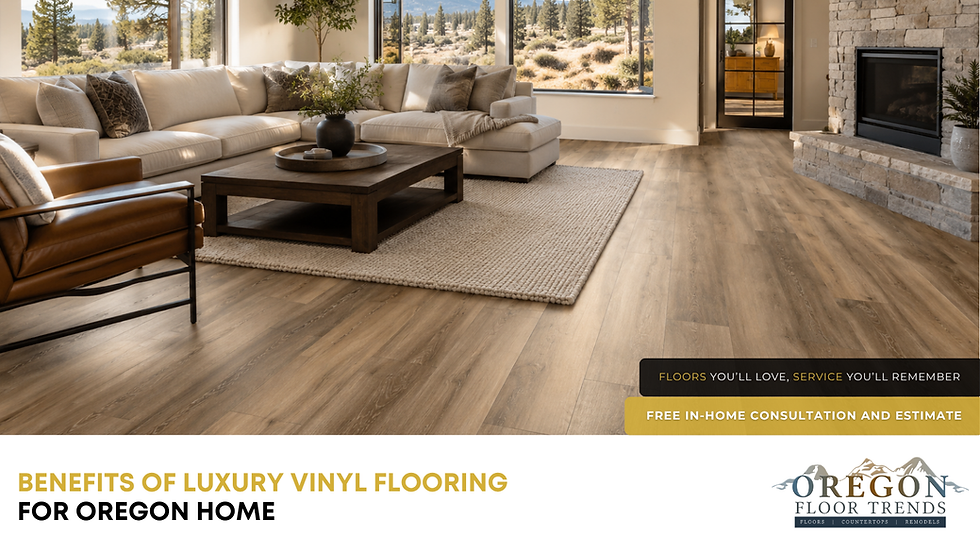
Wide-plank LVP in a warm oak or gray-brown tone is currently one of the most popular choices for Redmond living rooms. It photographs beautifully for real estate listings and creates the visual flow that makes open floor plans feel cohesive. For tips on creating a polished look, browse our Simple Upgrades for a Luxurious Home article.
Entryways and Mudrooms:
These high-traffic, high-moisture zones are where cheap LVP fails first. Invest in at least 20 mil wear layer here. The rigid core will handle the repeated temperature shocks from the door opening in January.
Bedrooms:
LVP works well in bedrooms, though some homeowners prefer the softness of carpet underfoot first thing in the morning. If you are deciding between the two, our comparison of Carpet vs Laminate Redmond OR gives a useful framework even though LVP outperforms laminate in most of the same comparisons. According to the American Lung Association, hard surface flooring like LVP is generally better than carpet for indoor air quality, particularly for allergy and asthma sufferers, because it does not trap dust, pet dander, and other particulates the way carpet fibers do.
LVP Trends and Technology in 2024 and Beyond
Luxury vinyl has come a long way from the sheet vinyl of the 1980s. The current generation of LVP products incorporates technology that was not commercially available even five years ago, and the pace of improvement continues to accelerate.
Embossed-in-Register (EIR) Texture:
The best LVP products now feature texture that is physically aligned with the printed wood grain beneath it, creating a tactile experience that is remarkably close to real hardwood. When you run your hand across a high-end EIR plank, you feel the grain channels and knots exactly where your eyes expect them. This is the feature that has most dramatically closed the gap between LVP and real wood in terms of perceived quality.
Wider and Longer Planks:
The market has shifted significantly toward wider planks (7 to 9 inches) and longer boards (60 to 72 inches). These proportions feel more architectural and less repetitive, especially in large open-plan spaces common in newer Redmond builds and remodels.
Integrated Underlayment:
Many premium SPC products now include an attached acoustic underlayment, which reduces hollow sound underfoot and provides a small amount of additional thermal insulation. This is worth paying for, particularly in two-story homes or over concrete slabs. Our piece on Noise-Reducing Flooring: Creating a Quieter, More Peaceful Home covers this topic in detail.
Smart Home Compatibility:
Newer flooring products are increasingly being designed with heated subfloor systems in mind. LVP is compatible with radiant floor heating when installed correctly, which is a growing option for Redmond homeowners dealing with cold winters. The intersection of flooring and smart home technology is explored further in our article on The Future of Flooring: How Smart Homes Are Changing Flooring Choices.
Low-VOC and Eco-Conscious Lines:
Consumer demand has pushed major LVP manufacturers toward products with FloorScore certification and low volatile organic compound (VOC) off-gassing. If indoor air quality is a priority for your household, look for this certification when shopping. Our overview of Eco-Friendly Flooring Options Central Oregon highlights which local options carry the strongest environmental certifications.

How to Choose the Best Place to Buy LVP in Redmond, OR
The product you choose matters, but so does the retailer and installer you choose. The flooring industry has a lot of variability in terms of product quality, installation skill, and post-sale support, and the stakes are high on a purchase that could represent $5,000 to $20,000 or more for a full home.
Look for a Local Showroom with Real Samples:
The single biggest advantage of buying from a local flooring store over an online retailer or big-box store is the ability to take physical samples home. LVP looks dramatically different under the warm-toned lighting of a showroom versus the natural light in your living room. Any reputable Redmond flooring store will encourage you to do this. Consumer Reports consistently recommends in-person sample evaluation as one of the most important steps in any flooring purchase, because color, sheen, and texture perception vary significantly by environment.
Ask About Installation Credentials:
Professional installation is what separates a floor that performs well for 20 years from one that develops edge curling, gapping, or hollow spots within a few years. Ask whether the store uses its own employed installers or subcontracts the work, and whether those installers are trained by the manufacturer. Our guide on Hiring Flooring Contractor Central Oregon outlines exactly what questions to ask before you sign a contract.
Evaluate the Warranty Structure:
A 20-year residential warranty is table stakes for quality LVP today. More important is understanding what the warranty actually covers: does it include installation labor, or just materials? What voids the warranty? Local stores that handle their own installation often provide more straightforward warranty support because there is no finger-pointing between retailer and separate installer.
Check for Post-Sale Support:
What happens if a plank is damaged three years from now? A local Redmond flooring store that maintains relationships with its customers and keeps records of your purchase means you can get a matching replacement without having to resurface an entire floor. For more guidance on evaluating flooring retailers, read our article on What to Look for in a Flooring Company in Central Oregon.

Things to Know: Technical Considerations Before You Buy LVP
Subfloor flatness is critical for rigid-core LVP. Industry standards require the subfloor to be flat within 3/16 of an inch over a 10-foot span. Skipping subfloor prep is one of the most common flooring mistakes homeowners and even some contractors make, and it leads to edge lifting and hollow spots over time.
LVP requires an expansion gap of 1/4 inch around all vertical obstructions including walls, cabinetry, door frames, and floor vents. This space accommodates normal thermal expansion and contraction. Failure to leave this gap is a leading cause of buckling in SPC floors installed in temperature-variable climates like Redmond's.
Wear layer thickness expressed in mil (thousandths of an inch) is not the same as overall plank thickness. A 12mm plank can have a 6 mil wear layer or a 20 mil wear layer. Always ask for the wear layer spec separately.
FloorScore certification indicates third-party testing for VOC emissions. GREENGUARD Gold is a separate but similarly rigorous standard. Both are good indicators of indoor air quality safety, particularly relevant for homes with children or respiratory sensitivities.
Most LVP manufacturers require a minimum acclimation period of 24 to 48 hours at room temperature before installation. In Redmond's climate, 48 hours is the safer choice during winter months when the HVAC system is running and interior humidity is particularly low.
Radiant heat compatibility varies by product. Not all LVP is rated for use with in-floor heating systems. If this is a feature you want now or may want in the future, verify compatibility before purchasing, as retrofitting can be costly.
Ready to Find the Best LVP for Your Redmond Home?
Oregon Floor Trends has been helping Central Oregon homeowners navigate exactly these decisions, with a showroom stocked with premium SPC and WPC luxury vinyl plank options across a wide range of styles, price points, and warranty levels. Our team knows the local climate, the common subfloor conditions in Redmond-area homes, and the products that hold up over the long haul here. Whether you are replacing a single room or outfitting an entire new build, we will walk you through samples, talk through your lifestyle needs, and provide a detailed installation quote with no pressure. Stop by our showroom, or reach out to start the conversation: visit us online at oregonfloortrends.com or call to schedule a free in-home consultation.
Frequently Asked Questions
What is the best place to buy luxury vinyl flooring in Redmond, OR?
A local flooring specialty store that offers in-person samples, professional installation, and post-sale support is your best option in Redmond.
Big-box retailers and online vendors can offer competitive pricing, but they rarely provide the climate-specific product guidance, subfloor assessment, or installation accountability that a local showroom does. Oregon Floor Trends serves Redmond homeowners with a full-service model that includes product selection, subfloor prep, installation, and warranty support all under one roof. For a broader look at what to evaluate when choosing where to shop, read our How to Choose a Flooring Store in Central Oregon guide.
How much does luxury vinyl plank flooring cost installed in Redmond, OR?
Installed LVP in Redmond typically runs between $5 and $10 per square foot, depending on the product tier, subfloor condition, and scope of the project.
Entry-level floating LVP with a 6 to 8 mil wear layer sits at the lower end of that range, while premium SPC products with 20 mil wear layers, EIR texture, and attached underlayment are closer to $8 to $12 installed. Subfloor leveling, removal of existing flooring, and stair work all add to the total. Getting an itemized quote that separates materials from labor helps you understand exactly where your money is going.
Is luxury vinyl plank a good choice for Redmond's dry, high-desert climate?
Yes, SPC-core LVP is particularly well-suited to Redmond's climate because of its dimensional stability in low-humidity, high-temperature-swing conditions.
Solid hardwood is the material most stressed by Redmond's aridity, as it can crack and gap when interior humidity drops below 35 percent during winter. Engineered hardwood handles it better but still requires careful humidity management. SPC-core LVP has essentially no moisture-related expansion or contraction, making it the most climate-tolerant hard surface option for local homes. Just ensure your installer leaves proper expansion gaps around all walls and fixed objects.
How do I know if a luxury vinyl product is high quality before I buy?
Check the wear layer thickness (look for at least 20 mil for high-traffic areas), verify FloorScore or GREENGUARD Gold certification, and request the full warranty documentation before you commit.
High-quality LVP also feels substantially heavier per plank than budget options, which reflects a denser, more stable core. In the showroom, press firmly on the plank and listen for a hollow sound, which is a sign of a thinner or lower-density core. Ask to see the spec sheet rather than relying solely on the sales tag. For more help evaluating your options, our Benefits of Luxury Vinyl Flooring article explains what the key specs actually mean in practice.
Can I install luxury vinyl plank over my existing flooring in my Redmond home?
In many cases yes, but only if the existing surface is flat, firmly bonded, and does not bring the total floor height above transition thresholds for doors and adjoining rooms.
LVP can be floated over existing hardwood, tile, or vinyl as long as the surface is level to within 3/16 of an inch per 10 feet and there are no loose, hollow, or raised sections. In Redmond homes with older vinyl or tile, a professional assessment is strongly recommended before assuming overlay is viable. Installing over a problematic subfloor is one of the most common and costly flooring mistakes homeowners make, as it compromises both the performance and the warranty of the new floor.


Comments